
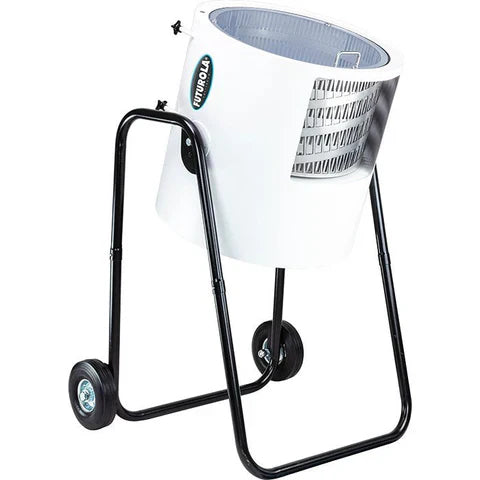
Scaling a flower processing operation to commercial volume is not just about doing more of the same thing faster. It requires the correct flower shredding equipment at each stage of the workflow, and the commercial shredder machine is where that scale-up begins. Shredding is the first processing step, and its output quality determines how every downstream stage performs.
Operations that attempt to ramp up production without upgrading their shredding equipment quickly hit the same wall. The machine that worked at lower volume becomes the bottleneck, output consistency drops, and the rest of the production line cannot perform at the level the volume demands.
Getting the shredder specification right for commercial scale is what removes that bottleneck and allows the full production workflow to run at its actual capacity.
What Commercial-Scale Shredding Actually Requires
A commercial shredder machine operates under fundamentally different demands than a compact or mid-range unit. Commercial production means extended run times, high material throughput per cycle, and the expectation that output quality stays consistent from the first batch of the day to the last.
The machine needs to handle that demand without degrading in performance as the processing hours accumulate.
The specifications that matter at commercial scale go beyond throughput numbers.
Build quality, blade durability, drive mechanism reliability, and the ability to sustain output consistency under sustained heavy use are what separate a machine built for commercial production from one that technically functions at higher volumes but was not designed to hold that performance standard over time.
Throughput as the Starting Point
Throughput capacity is the first specification that defines whether a shredder machine is suited for commercial production. It determines how much material can be processed per cycle and per shift, and it sets the ceiling on what the downstream production workflow can achieve.
A commercial operation running an undersized shredder will always be limited by that constraint, regardless of how well the rest of the equipment performs.
FUTUROLA's Mega formats are the commercial-scale options within the shredder lineup, delivering increased power and throughput capacity relative to smaller models.
For operations ramping up to commercial scale, these are the formats that match the production demand.
Consistency Under Extended Production Runs
Throughput capacity tells one part of the commercial production story. Consistency across extended production runs tells the other.
A commercial shredder machine that produces uniform shred texture in the first hour of a shift but degrades in consistency by the third hour is not a commercial-grade machine, regardless of its rated capacity. Commercial production requires that the output standard holds across the full duration of every production day.
FUTUROLA's shredder machines are built with durable construction and precision engineering designed to withstand heavy usage and provide long-lasting efficiency.
That construction standard is what sustains output consistency across extended commercial production runs, and it is the practical difference between a machine that meets throughput specifications on paper and one that actually performs at commercial volume in real production conditions.
The FUTUROLA Classic Shredder Line at Commercial Scale
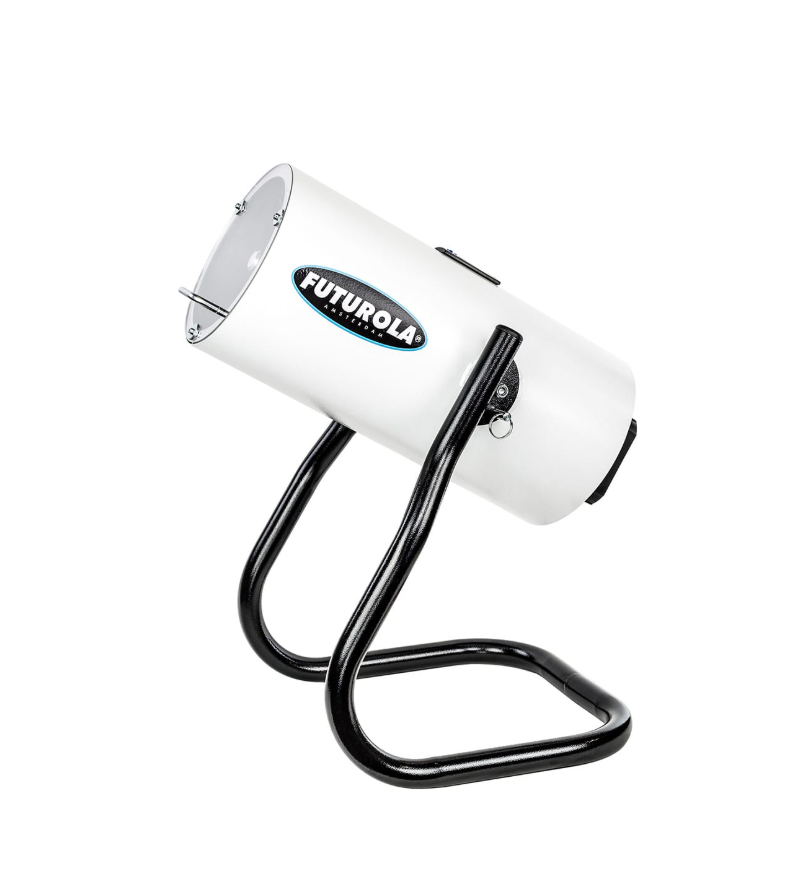
The Classic Shredder line covers production volumes from small-scale to commercial through the Mini, OG, and Mega formats
Each size represents a distinct throughput tier, and the two largest options are specifically designed for commercial production environments. Understanding how each size fits into a commercial production strategy clarifies how the lineup supports operations at different stages of scaling.
The Mini and OG are relevant in commercial contexts as secondary or dedicated units within a larger setup rather than primary commercial-scale machines.
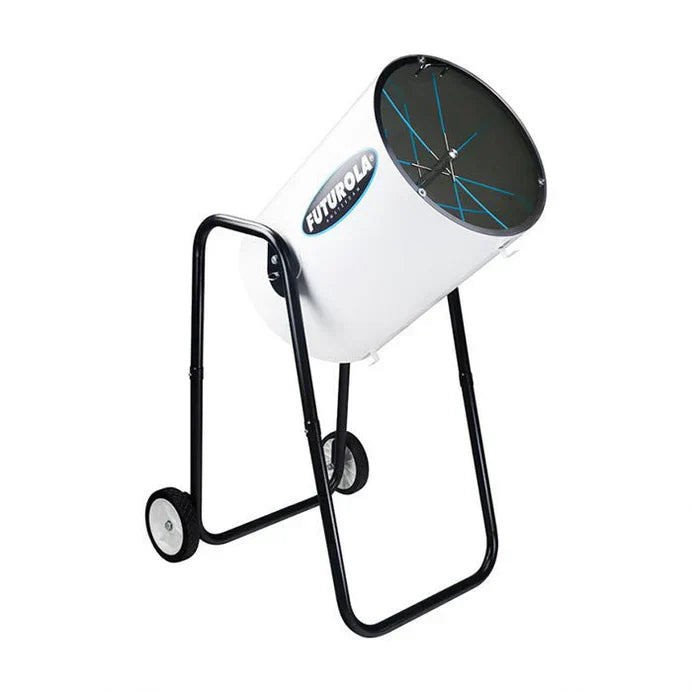
The Mega is the primary commercial shredder formats, built for the throughput and sustained performance that large-scale production demands.
The Mega: Commercial Throughput at Production Scale
The Mega delivers the processing power and throughput capacity that commercial pre-roll and flower processing operations require. It handles large batches consistently, maintains shred quality across extended production runs, and is built to the construction standard that commercial production environments demand.
For operations making the transition from mid-scale to commercial volume, the Mega is the upgrade that removes the shredding bottleneck from the production workflow.
The best shredder machines at commercial scale are those that hold their output quality under the kind of sustained, high-volume use that commercial production represents.
The Mega is engineered for exactly that demand, and its performance across high-volume production runs is what makes it the right commercial shredder machine choice for operations that are serious about scaling.
The Pro Shredder: Advanced Features for Commercial Operations
Commercial pre-roll production often involves processing requirements that go beyond standard shredding.
Stem content in the material, the need for specific particle size distributions in the output, and the goal of minimizing manual processing steps at production scale are all considerations that the Classic Shredder line handles through shredding alone but cannot address fully. The Pro Shredder line adds the features that complete the commercial processing workflow.
The Pro Shredder is available in Mini, OG, and Mega sizes and adds a destemmer and a sifting screen barrel to the shredding cycle. These features are particularly valuable in commercial production contexts where manual processing steps add significant labor cost and introduce consistency variability across high-volume output.
Automated Destemming at Commercial Volume
Stem removal is a necessary step in producing clean, high-quality output for pre-roll production. At commercial volume, doing this manually is both labor-intensive and inconsistent.
Manual destemming at scale introduces variability because operator thoroughness and speed vary across a long production shift. The automated destemmer in the Pro Shredder handles stem removal during the shredding cycle itself, producing consistently clean output without the labor overhead of manual destemming.
An effective shredder machine for commercial pre-roll production is one that reduces the number of manual processing steps between raw material and filled cone.
The destemmer in the Pro Shredder eliminates a step that would otherwise require dedicated time and labor, and it does so with the consistency that automated processing provides over manual intervention. At commercial volume, that difference in consistency and labor efficiency is significant.
Sifting Screen Barrel for Output Quality Control
The sifting screen barrel in the Pro Shredder classifies shredded material by particle size during the processing cycle, producing sorted output that goes directly into the next production stage without additional manual sifting.
For commercial pre-roll operations that maintain specific fill texture specifications, the sifting screen barrel provides built-in particle size control at the shredding stage.
This level of output classification within the shredding cycle reduces the complexity of the downstream workflow by delivering pre-sorted material to the filling stage.
In commercial production, removing processing steps and reducing manual handling improves both throughput and consistency.
The premium shredder machine format that combines shredding, destemming, and sifting in a single cycle is the most efficient configuration for commercial operations where all three of those processing steps are part of the workflow.
How to Structure a Commercial Shredding Workflow
Ramping up production with a commercial shredder machine is not just about installing a larger machine and running it harder. It requires structuring the workflow around the machine's capabilities to get the maximum consistent output from each production shift.
The workflow design around the shredder directly affects how efficiently the machine's throughput capacity translates into finished product.
Feed rate, material preparation, output handling, and maintenance scheduling are all workflow elements that determine whether a commercial shredder machine runs at its actual capacity or consistently underperforms relative to its specifications. Getting these elements right is what turns a well-specified machine into a well-performing production workflow.
Material Preparation Before Shredding
The quality of the material going into a commercial shredder machine directly affects the quality and consistency of the output.
Material that is properly cured, free of significant stem content where manual pre-sorting is practical, and at appropriate moisture levels for the intended shred texture will produce more consistent output than material that varies in moisture content or contains unpredictable amounts of stem and debris.
Establishing a material preparation standard that feeds the shredder with consistent input is one of the most effective workflow improvements available to commercial operations. The shredder's precision engineering and blade design produce their best results when the input material is consistent.
Variable input produces variable output regardless of how well the machine is built.
Output Handling and Integration With Filling Equipment
The output from a commercial shredder machine feeds directly into the next production stage, whether that is a filling machine, a packaging station, or a temporary holding stage before further processing. The workflow design between the shredder and the next stage affects how well the shredder's throughput is captured and how efficiently the production line as a whole operates.
FUTUROLA Shredders produce output that is designed to work directly with filling machines and downstream production equipment.
Integrating the shredder output smoothly into the filling stage, with appropriate holding and transfer mechanisms that maintain material quality between stages, keeps the full production workflow running at the throughput capacity that the commercial shredder machine makes possible.
Maintenance Scheduling for Sustained Commercial Performance
A commercial shredder machine running at high production volume requires a maintenance schedule that keeps it performing at specification across the full operational life of the equipment.
Regular cleaning between production cycles, blade inspection at appropriate intervals, and component checks that catch wear before it affects output quality are all part of operating a commercial shredder machine at the standard that commercial production demands.
Operations that treat maintenance as a reactive response to performance problems rather than a proactive part of the production schedule will consistently experience more downtime and more output variability than those that build maintenance into the workflow.
FUTUROLA's shredder machines are designed with durable construction that minimizes maintenance frequency, but no commercial production machine performs at its best without appropriate care built into the operational routine.
Final Thoughts
A commercial shredder machine is the piece of equipment that determines the ceiling of what a flower processing operation can consistently produce.
Getting the specification right, building the workflow around the machine's capabilities, and maintaining the equipment to the standard that sustained commercial production requires are the elements that turn a well-specified shredder into a genuine production asset.
The FUTUROLA Classic Shredder lineup, with the Mega at the commercial end of the range, and the Pro Shredder line with destemming and sifting capabilities, covers the full range of commercial production requirements.
Matching the machine to the operation's current volume and growth trajectory is the decision that sets the production scale-up on the right foundation.
FAQs
What makes a shredder machine suitable for commercial production?
A commercial shredder machine needs to handle high throughput consistently across extended production runs without degrading in output quality. The key factors are throughput capacity, blade durability, build quality, and the ability to sustain consistent shred texture across a full production shift rather than just performing well at initial use.
How is Mega helpful for commercial production?
Mega is designed for commercial-scale production throughput capacity and sustained performance at the upper end of commercial production demand. The Mega is the right choice for operations entering commercial volume.
How does the Pro Shredder improve commercial pre-roll production specifically?
The Pro Shredder adds a destemmer and sifting screen barrel to the shredding cycle, automating stem removal and particle size classification within the same processing step. For commercial pre-roll production, this reduces manual labor, improves output consistency, and removes processing steps that would otherwise slow the production workflow between shredding and filling.
How should a commercial shredding workflow be structured for maximum efficiency?
Consistent material preparation before shredding, smooth output transfer to the filling stage, and a proactive maintenance schedule are the three workflow elements that determine how well a commercial shredder machine's throughput capacity translates into finished product. Getting all three right keeps the full production line running at the throughput the shredder makes possible.
When is it time to upgrade to a commercial shredder machine?
The clearest signals are the current shredder running at maximum capacity for most of the production shift, output consistency declining across longer runs, and the rest of the production line waiting on the shredder. When these indicators appear together, the shredder has become the production bottleneck and an upgrade to a commercial-scale machine is the most direct solution.

LEAVE A COMMENT
All comments are moderated before being published.
This site is protected by hCaptcha and the hCaptcha Privacy Policy and Terms of Service apply.